Featured
Table of Contents
- – Adapting Your [a:specialty] Marketing for Futu...
- – Smart Speaker Integration in Auto glass
- – Conquering Community Search Results for [a:sp...
- – Multi-Location Auto glass Management for [a:s...
- – Journey Optimization for [a:specialty] Patie...
- – Contemporary Patient Journey in Locating [a:...
- – Analyzing Query Volume in [a:specialty]
Visit our to find out more about our dedication to excellenceor browse our for added insights. The future comes from those that welcome it. Will you be just one of them?.
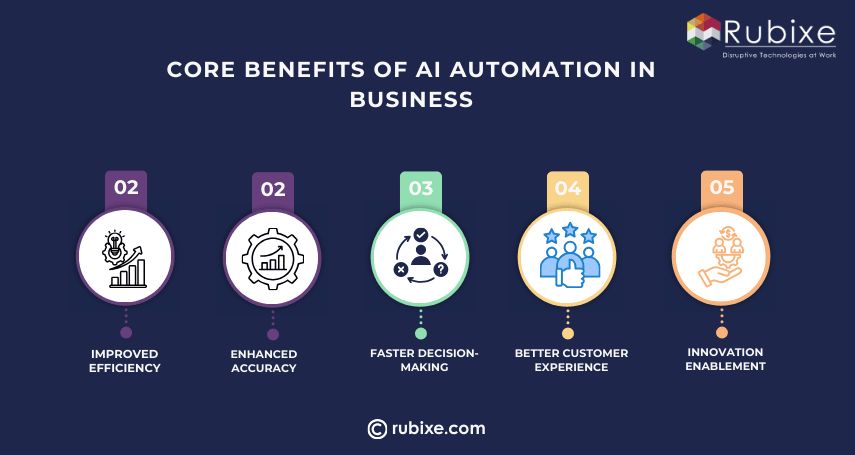
This difference highlights AI's potential to introduce a layer of knowledge that boosts productivity and modification. As it automates recurring tasks such as evaluating resumes or monitoring participation, AI substantially reduces the time invested on these processes.
Adapting Your [a:specialty] Marketing for Future Platforms
Similar to tax obligations, human error is unavoidable, especially in complicated locations like compliance. Nonetheless, AI guarantees a greater degree of accuracy because it filters out these errors, bring about more constant results and minimizing the threats connected with manual blunders. Are a considerable advantage. With AI automation, organizations can release up their human resources team to concentrate on efforts that drive development.
AI automation makes procedures smarter, more effective, and employee-centric. Starting with the employing process and getting to conformity, AI-powered HR tools deal with repeated and data-heavy jobs and enable human resources groups to concentrate on strategy and creativity. Below, we'll break down vital human resources features that AI can significantly redefine: Hiring is just one of the most taxing tasks for HR, and AI is a turning point right here.
A well-structured onboarding procedure can make all the distinction so that they remain. AI-powered chatbots can give instant responses to common questions and minimize the need for HR to repeatedly deal with standard questions. Additionally, AI tools can direct new hires through the required documentation, training modules, and company policies to make sure that they're geared up to be successful from the first day.
Smart Speaker Integration in Auto glass
Collecting and examining worker responses is helpful for understanding workplace spirits., all which supply actionable insights to HR groups. This makes way for purposeful tweaks to improve worker contentment and retention.
AI tools can assist with this since LLMs or ad-hoc AIs can track policy updates. Human resources teams can then inspect adjustments and ensure that human resources methods abide by the most current policies. AI automation in HR redefines how HR divisions run as it resolves core difficulties with intelligent options. Here's exactly how AI optimizes human resources procedures: AI takes control of repeated and lengthy tasks, like resume screening.
Conquering Community Search Results for [a:specialty]
It's essential to and establish where automation will have the most effect. If you're concentrated on boosting recruitment, an AI platform that can properly create work summaries might be your best bet.
One of the most noteworthy growths will be the. This innovation will certainly enable HR groups to forecast which candidate will be the most effective for a task simply by reviewing a resume. Nonetheless, it will likewise determine future workforce demands, identify worker retention threats, and even recommend which staff members might take advantage of additional training.
An additional area where AI is set to make waves is in. It's most likely that staff members will not desire to talk with virtual health assistants powered by AI.
Multi-Location Auto glass Management for [a:specialty] Practices

In terms of personalization, generative AI could take them also additionally. And speaking about that strain of tech, can end up being a game-changer in HR automation. This technology is expected to go beyond basic chatbots and aid HR groups develop tailored work summaries, automated efficiency reviews, and also customized training programs.
AI automation is rewriting Human resources as it deals with repeated and lengthy jobs and enables Human resources specialists to concentrate on calculated goals. An improved employee experience and reliable data for decision-making are also benefits of having AI connected into a Human resources procedure.
The idea of "a machine that thinks" dates back to ancient Greece. From there, he offers an examination, now famously known as the "Turing Examination," where a human interrogator would attempt to distinguish between a computer and human text action.
Journey Optimization for [a:specialty] Patient Conversion
John McCarthy coins the term "synthetic knowledge" at the first-ever AI meeting at Dartmouth University. Later that year, Allen Newell, J.C. Shaw and Herbert Simon develop the Reasoning Theorist, the first-ever running AI computer system program.
Semantic networks, which use a backpropagation algorithm to train itself, ended up being extensively utilized in AI applications. Stuart Russell and Peter Norvig publish Artificial Intelligence: A Modern Approach, which turns into one of the leading textbooks in the study of AI. In it, they explore four potential goals or definitions of AI, which sets apart computer system systems based upon rationality and believing versus acting.
With these brand-new generative AI practices, deep-learning models can be pretrained on large quantities of information. Multimodal models that can take multiple types of information as input are giving richer, much more durable experiences.
Contemporary Patient Journey in Locating [a:specialty] Services
Below are the vital ones: Offers Scalability: AI automation changes easily as business needs grow. It uses cloud sources and equipment understanding models that increase capability without additional manual labor. Uses Rate: AI designs (or devices) procedure details and respond instantaneously. This makes it possible for faster service shipment and lowers delays in operations.
Collect Data: Gather appropriate information from trusted resources. The data might be insufficient or have additional information, however it forms the base for AI.Prepare Data: Clean the data by getting rid of errors and redundancies. Arrange the information to fit the AI approach you intend to utilize. Select Formula: Pick the AI formula ideal matched for the issue.
This helps check if the AI model discovers well and executes properly. Train Model: Train the AI version utilizing the training information. Test it repeatedly to improve precision. Incorporate Version: Incorporate the qualified AI model with the existing software program application. Examination Model: Test the incorporated AI model with a software program application to ensure AI automation functions correctly.
Health care: AI is used to forecast diseases, handle client records, and offer personalized medical diagnoses. It supports medical specialists in reducing mistakes and boosting therapy accuracy. Financing: AI assists identify fraudulence, automate KYC, and confirm documents rapidly. It scans purchases in real-time to detect anything suspicious. Manufacturing: AI forecasts devices failures and manages high quality checks.
Analyzing Query Volume in [a:specialty]
It aids projection demand and set dynamic rates. Stores also use AI in storage facilities to simplify stock handling. AI automation functions best when you have the right devices constructed to handle certain jobs.
ChatGPT: It is an AI tool that assists with tasks like composing, coding, and answering concerns. ChatGPT is utilized for composing emails, summing up text, producing concepts, or fixing coding troubles.

Table of Contents
- – Adapting Your [a:specialty] Marketing for Futu...
- – Smart Speaker Integration in Auto glass
- – Conquering Community Search Results for [a:sp...
- – Multi-Location Auto glass Management for [a:s...
- – Journey Optimization for [a:specialty] Patie...
- – Contemporary Patient Journey in Locating [a:...
- – Analyzing Query Volume in [a:specialty]
Latest Posts
Discretion Concerns in [a:specialty] Web Marketing
Technical SEO Tactics for Wellness Professionals
Exploring the Fundamentals of Auto glass
More
Latest Posts
Discretion Concerns in [a:specialty] Web Marketing
Technical SEO Tactics for Wellness Professionals
Exploring the Fundamentals of Auto glass